


Seeing Double? How Neuro-Ophthalmology Helps Identify When It’s More Than an Eye Problem

Seeing double can feel unsettling. One object may suddenly appear as two, words may overlap while reading, or road signs may look duplicated while driving.
While many people assume double vision is simply an eye problem, it can sometimes be linked to the nerves, eye muscles, or brain pathways that help both eyes work together. Let’s learn more about what causes double vision and when it may require medical attention with Dr Lakana, Consultant Neuro-Ophthalmologist, and understand how neuro-ophthalmology helps identify when vision changes may be more than an eye problem.

What Is Double Vision?
Double vision, also known as diplopia, happens when a person sees two images of one object.
The images may appear side by side, one above the other, or slightly tilted. Double vision may affect one eye or happen only when both eyes are open.
If double vision remains when one eye is closed, the cause may be related to the eye itself. If it disappears when either eye is closed, it may indicate that both eyes are not aligning properly and may require further assessment.
What Causes Double Vision?
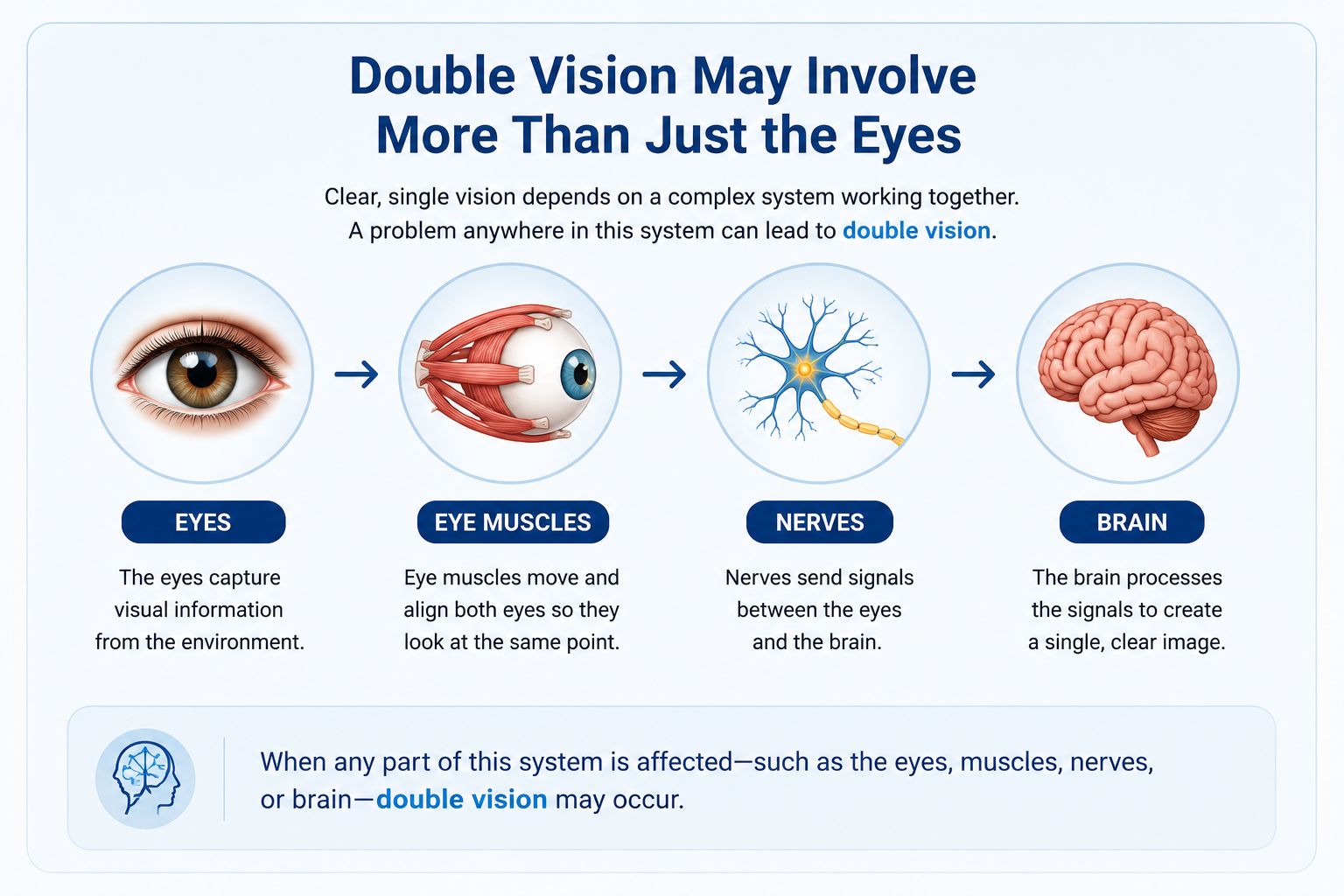
For clear single vision, both eyes need to move together and focus on the same point.
This requires healthy eye muscles, nerves, and brain pathways working in coordination. When any part of this system is affected, the eyes may point in slightly different directions, causing the brain to receive two separate images.
Possible causes of double vision may include:
-
Eye muscle imbalance
-
Nerve conditions affecting eye movement
-
Thyroid eye disease
-
Diabetes-related nerve changes
-
Inflammation affecting the nerves
-
Stroke-related conditions
-
Trauma or injury
-
Other neurological disorders
Not every case is serious, but sudden or persistent double vision should not be ignored.
When Should You See a Doctor for Double Vision?
Double vision should be assessed, especially if it appears suddenly or affects daily activities such as reading, walking, driving, or working.
Seek medical attention promptly if double vision occurs together with:
-
Sudden vision loss
-
Severe headache
-
Drooping eyelid
-
Eye pain
-
Weakness or numbness
-
Slurred speech
-
Dizziness or loss of balance
-
Difficulty moving the eyes
These symptoms may suggest that the problem is not limited to the eyes and may require urgent evaluation.
How a Neuro-Ophthalmologist Diagnoses Double Vision
A neuro-ophthalmology assessment looks beyond eyesight alone.
The specialist may evaluate visual clarity, eye movements, pupil reactions, eyelid position, optic nerve health, and visual fields. Depending on the symptoms, further investigations such as imaging scans or blood tests may also be recommended.
The goal is to identify whether the problem originates from the eye, the nerves, the muscles, the brain, or another underlying health condition.
What Are the Treatment Options for Double Vision?
Treatment depends on the underlying cause.
Some patients may require treatment for an associated medical condition, while others may benefit from prisms in their glasses, temporary patching, medication, eye exercises, or surgery in selected cases.
The most important step is obtaining an accurate diagnosis so that treatment can be tailored appropriately.
Why You Should Not Ignore Double Vision
Double vision can affect more than just vision. It may impact balance, reading, driving, work performance, and overall quality of life.
While some causes may be manageable, double vision should always be assessed when it is new, persistent, worsening, or associated with other symptoms.
Early assessment can help identify underlying conditions and support timely treatment before complications develop.
Concerned About Double Vision or Vision Changes?
If you are experiencing double vision or unusual changes in your vision, consider speaking with a specialist for a comprehensive assessment.
Learn more about our Neuro-Ophthalmology services and how timely evaluation can help protect your vision and overall neurological health.
Was this article helpful?
2 out of 2 found this helpful
Suggest to Read