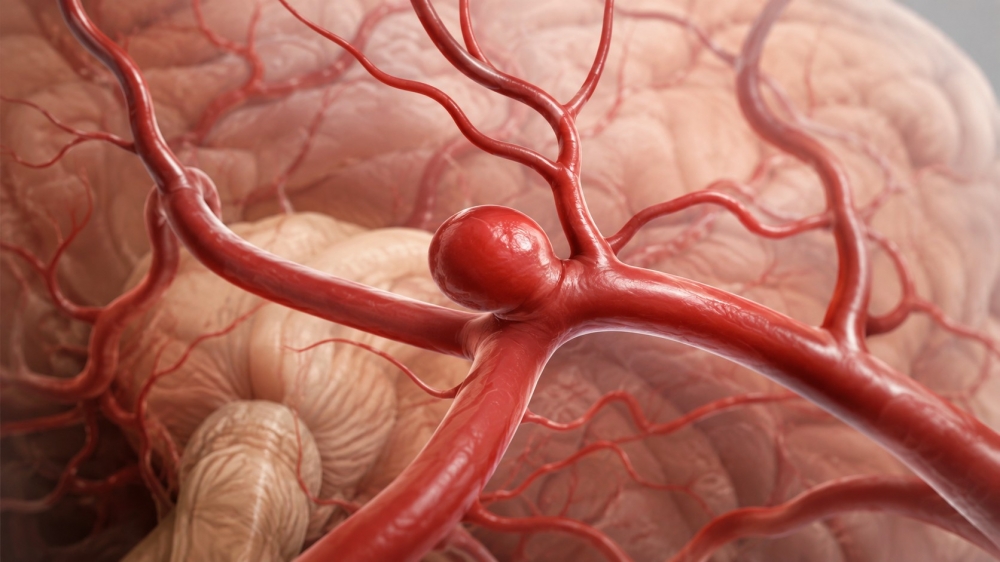



Walking Slower, Becoming More Forgetful and Having Bladder Changes: Could It Be Normal Pressure Hydrocephalus?

A parent starts taking smaller steps and needs more time to turn. The family notices increasing forgetfulness. Soon, urinary urgency or accidents begin too. It can look like several unrelated problems, or simply “getting older”.
But when walking changes, cognitive slowing and bladder-control problems occur together, doctors may consider a condition called normal pressure hydrocephalus (NPH). Unlike many causes of progressive decline, NPH may respond to treatment in appropriately selected patients, making accurate assessment especially important.
Let’s understand more with Dr Mah Jon Kooi, Consultant Neurosurgeon, Spine Surgery, on how normal pressure hydrocephalus can affect mobility, thinking and bladder control, and how neurosurgical assessment can help determine the next step.

What is normal pressure hydrocephalus?
Hydrocephalus occurs when cerebrospinal fluid (CSF), the clear fluid that surrounds and supports the brain and spinal cord, builds up abnormally. In normal pressure hydrocephalus, the brain’s fluid-filled spaces, called ventricles, enlarge even though the measured pressure may remain within or near the usual range.
NPH is most often seen in older adults. It can develop without a clear cause, or it may follow conditions that affect normal CSF circulation or absorption, such as bleeding around the brain, infection, head injury or other neurological conditions.
What are the three main symptoms of NPH?
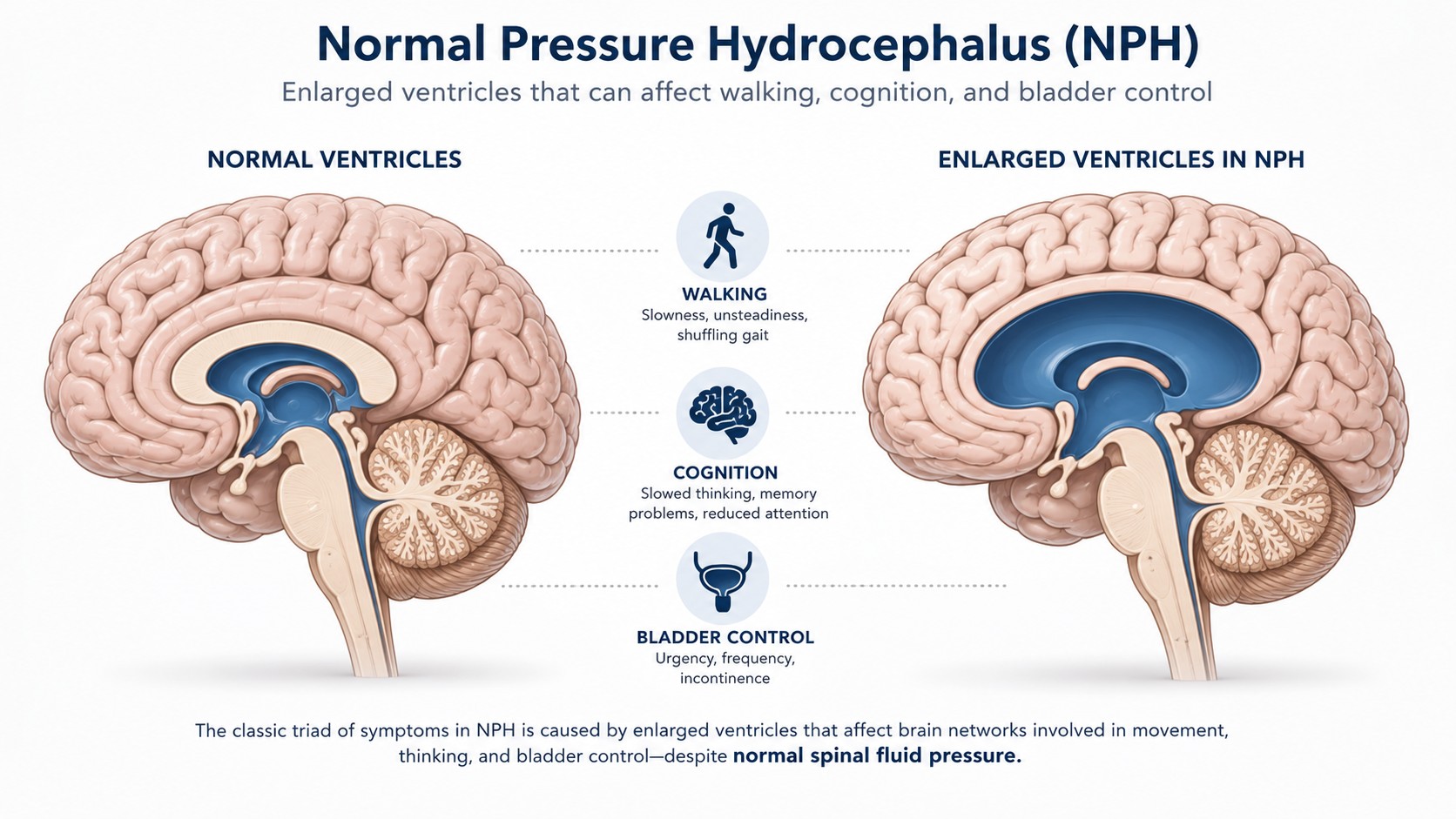
The classic pattern involves gait changes, cognitive difficulties and urinary symptoms. The symptoms often develop gradually, and a person does not need to have all three for NPH to be considered.
1. Walking and balance changes
Walking difficulty is often one of the most noticeable features. A person may take short, slow steps, feel as though the feet are stuck to the floor, have trouble starting to walk or turn, or become more prone to imbalance and falls.
2. Slower thinking or memory changes
NPH can affect attention, planning, decision-making and memory. Families may notice that the person responds more slowly, seems less engaged, has difficulty organising tasks or becomes increasingly forgetful.
3. Urinary urgency or loss of bladder control
Urinary symptoms may begin as urgency or needing to pass urine more often and can progress to incontinence. Bladder symptoms are common in older adults for many reasons, so they need to be interpreted together with the neurological picture.
Why is NPH sometimes mistaken for ageing, Parkinson’s disease or dementia?
The symptoms overlap with several more common conditions in older adults. Slower walking may be blamed on arthritis, balance problems or Parkinsonism. Memory changes may raise concern for Alzheimer’s disease or another dementia. Urinary symptoms may be attributed to bladder or prostate conditions.
The pattern becomes more significant when these changes appear together. A careful neurological examination can help identify whether the walking pattern and cognitive changes are compatible with NPH or point toward another diagnosis.
How is normal pressure hydrocephalus diagnosed?
There is no single symptom that confirms NPH. Assessment typically combines the clinical history, neurological examination and brain imaging. CT or MRI may show enlarged ventricles and help doctors look for other conditions that could explain the symptoms.
In selected patients, further testing may be used to estimate whether symptoms could improve after CSF drainage. This can include a lumbar puncture, sometimes called a tap test, in which a quantity of CSF is removed and walking or other functions are reassessed. Some patients may require more extended CSF drainage testing.
SMCV’s Neurosurgery service at Velocity Neurocentre assesses conditions affecting the brain, spinal cord and CSF pathways, while the hospital’s diagnostic and surgical facilities support further evaluation and treatment where needed.
How is NPH treated?
When the assessment suggests that a patient is likely to benefit, the usual treatment is surgery to divert excess CSF away from the brain. A commonly used procedure is placement of a ventriculoperitoneal shunt, a thin tube that drains fluid from the brain’s ventricles to the abdomen, where it can be absorbed.
A shunt is not appropriate for every patient with enlarged ventricles or memory problems. The decision depends on the overall clinical picture, imaging and response to diagnostic testing, as well as the patient’s health and ability to undergo surgery.
Which symptoms tend to improve first?
Walking problems are often the symptom doctors monitor most closely because gait can be a prominent feature of NPH and can be measured before and after CSF drainage. Improvement varies between patients, and not every symptom will recover to the same extent.
The presence of other neurological conditions can also affect the degree of improvement. This is why the aim of assessment is not simply to identify enlarged ventricles on a scan, but to determine whether the whole clinical pattern fits NPH.
When should an older adult be assessed?
New or progressive walking difficulty, repeated falls, noticeable cognitive slowing or new urinary incontinence should not automatically be dismissed as normal ageing. These symptoms are common and often have other causes, but a medical assessment can help determine whether NPH or another neurological condition should be investigated.
Sudden weakness, sudden inability to walk, abrupt confusion, loss of consciousness or new speech difficulty should be treated as an emergency because those symptoms can suggest acute neurological problems rather than slowly developing NPH.
The value of recognising a pattern
NPH can be difficult to recognise because each symptom can look ordinary on its own. The clue is often the combination: walking becomes less steady, thinking slows and bladder control changes over the same period.
Recognising that pattern does not confirm the diagnosis, but it can prompt the right neurological and neurosurgical assessment. For some patients, identifying NPH can open the door to treatment that may meaningfully improve daily function.
For assessment in Kuala Lumpur, learn more about Dr Mah Jon Kooi, Neurosurgery at Velocity Neurocentre, and SMCV’s Surgical Centre.
Frequently Asked Questions
Was this article helpful?
1 out of 1 found this helpful
Suggest to Read