



Joint Pain or “Just Ageing”? Knowing When to Seek Help
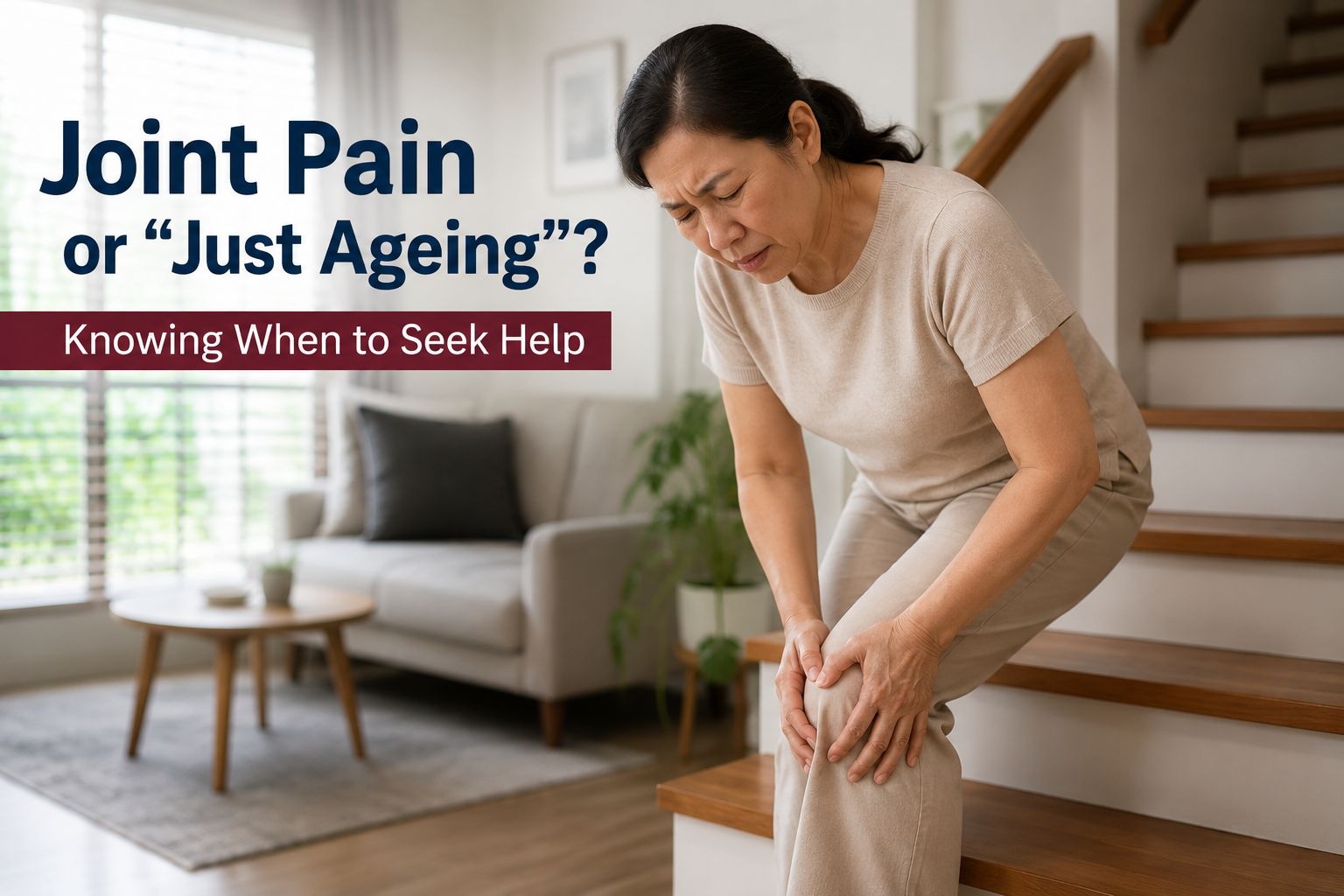
Many people dismiss joint pain as a natural part of getting older.
“It’s just ageing.”
“I’ve been living with it for years.”
“My knees hurt because I’m getting older.”
While some changes in the joints occur naturally over time, persistent joint pain is not something that should simply be accepted as part of ageing. In many cases, ongoing pain may be a sign of an underlying condition that can be managed or treated.
Understanding the difference between normal age-related changes and symptoms that require medical attention can help people maintain their mobility, independence, and quality of life.
Let’s take a closer look at when joint pain may be more than just a part of ageing with Dr Yuen Jin Chuan, Consultant Orthopaedic, Trauma and Arthroplasty Surgeon, and understand when it may be time to seek medical attention.

Is Joint Pain a Normal Part of Ageing?
As we age, the cartilage that cushions our joints can gradually wear down. Muscles may become weaker, and joint flexibility may decrease over time.
However, ageing itself should not cause severe pain that interferes with daily activities.
If joint pain is making it difficult to walk, climb stairs, exercise, sleep comfortably, or enjoy activities you once loved, it may indicate an underlying problem rather than simply growing older.
Common Causes of Joint Pain
Joint pain can affect various parts of the body, particularly weight-bearing joints such as the knees and hips.
Common causes include:
-
Osteoarthritis
-
Previous injuries or trauma
-
Sports-related wear and tear
-
Inflammatory joint conditions
-
Joint deformities or structural abnormalities
Over time, these conditions may lead to progressive pain, stiffness, swelling, and reduced mobility.
When Should You See a Doctor?
Many people delay seeking treatment because they assume nothing can be done.
However, early assessment may help identify the cause of the pain and prevent further joint damage.
Consider consulting a specialist if you experience:
-
Persistent joint pain lasting several weeks or longer
-
Pain that affects your ability to walk or exercise
-
Stiffness that limits daily activities
-
Swelling around the joint
-
Difficulty climbing stairs
-
Pain that disrupts sleep
-
Reduced range of motion
Seeking medical advice early may provide access to treatments that help manage symptoms before the condition progresses.
Treatment Options Have Advanced Significantly
Not every patient with joint pain requires surgery.
Depending on the diagnosis, treatment options may include lifestyle modifications, physiotherapy, exercise programmes, medications, injections, or other non-surgical approaches.
For patients with advanced joint damage or severe arthritis, joint replacement surgery may be considered when conservative treatments are no longer providing sufficient relief.
Modern joint replacement procedures have evolved significantly over the years, focusing on pain relief, improved mobility, and enhanced recovery pathways.
Understanding Joint Replacement Surgery
Joint replacement surgery involves replacing damaged joint surfaces with artificial components designed to restore movement and reduce pain.
The most commonly performed procedures include:
-
Knee Replacement Surgery
-
Hip Replacement Surgery
The goal is not simply to replace the joint, but to help patients return to daily activities with greater comfort and confidence.
Many patients who undergo successful joint replacement are able to resume walking, travelling, exercising, and participating in activities that had become difficult due to chronic pain.
Recovery Is Different Than It Used to Be
One of the biggest misconceptions about joint replacement surgery is that recovery requires prolonged bed rest.
Today, advances in surgical techniques, anaesthesia, pain management, and rehabilitation have transformed the patient experience.
Many patients are encouraged to begin moving shortly after surgery under the guidance of healthcare professionals and physiotherapists. Early mobilisation plays an important role in supporting recovery and helping patients regain confidence in their new joint.
Recovery timelines vary from person to person, but modern orthopaedic care aims to help patients return to their daily routine as safely and efficiently as possible.
Don’t Let Joint Pain Limit Your Life
Living with chronic joint pain may gradually affect mobility, independence, and overall quality of life.
While ageing can contribute to changes within the joints, persistent pain should never be ignored or dismissed as “just getting older.”
Understanding the cause of your symptoms is the first step towards finding the most appropriate treatment and maintaining an active lifestyle.
Concerned About Your Joint Health?
If knee, hip, or joint pain is affecting your daily activities, consider speaking with an orthopaedic specialist for a comprehensive assessment, bone health assessment, and personalised treatment advice.
Learn more about our Orthopaedic Services and Joint Replacement to explore how modern treatment options can help you move more comfortably and confidently.
Was this article helpful?
4 out of 4 found this helpful
Suggest to Read