



Have You Noticed Flashes or Floaters in Your Vision? It Could Be Your Retina Asking for Help

Have you ever noticed tiny specks, cobweb-like shadows, or thread-like shapes drifting across your vision? Or sudden flashes of light, especially at the side of your vision?
These are commonly known as floaters and flashes. In many cases, floaters may happen due to natural changes inside the eye, especially as we age. However, a sudden increase in floaters, new flashes of light, or a dark shadow in your vision may be warning signs of a more serious retinal problem.
The retina is the light-sensitive layer at the back of the eye. It plays an important role in helping you see clearly. When the retina is torn or detached, it can become an eye emergency that requires prompt assessment and treatment.
Let’s understand more with Dr. Justin Yeak Dieu Siang, Consultant Ophthalmologist,Vitreoretinal Surgeon, on when flashes and floaters should be checked urgently, and why early assessment can help protect your vision.

What Are Eye Floaters?
Floaters are small shapes that appear to move across your vision. They may look like dots, lines, circles, cobwebs, or tiny shadows.
They are often more noticeable when looking at a bright background, such as a white wall, the sky, or a computer screen. Some floaters may move when you move your eyes, and they may seem to drift away when you try to look directly at them.
Floaters can occur when the gel-like substance inside the eye, called the vitreous, changes over time. For many people, occasional floaters are not dangerous. However, a sudden shower of new floaters should not be ignored.
What Are Flashes of Light?
Flashes may look like brief sparks, streaks, or flickers of light in your vision.
They may happen when the vitreous pulls on the retina. Sometimes this pulling does not cause harm, but in some cases, it can lead to a retinal tear. If a retinal tear is not treated, it may progress to retinal detachment.
This is why new or sudden flashes, especially when combined with new floaters, should be assessed by an eye specialist.
When Should You Seek Urgent Eye Care?
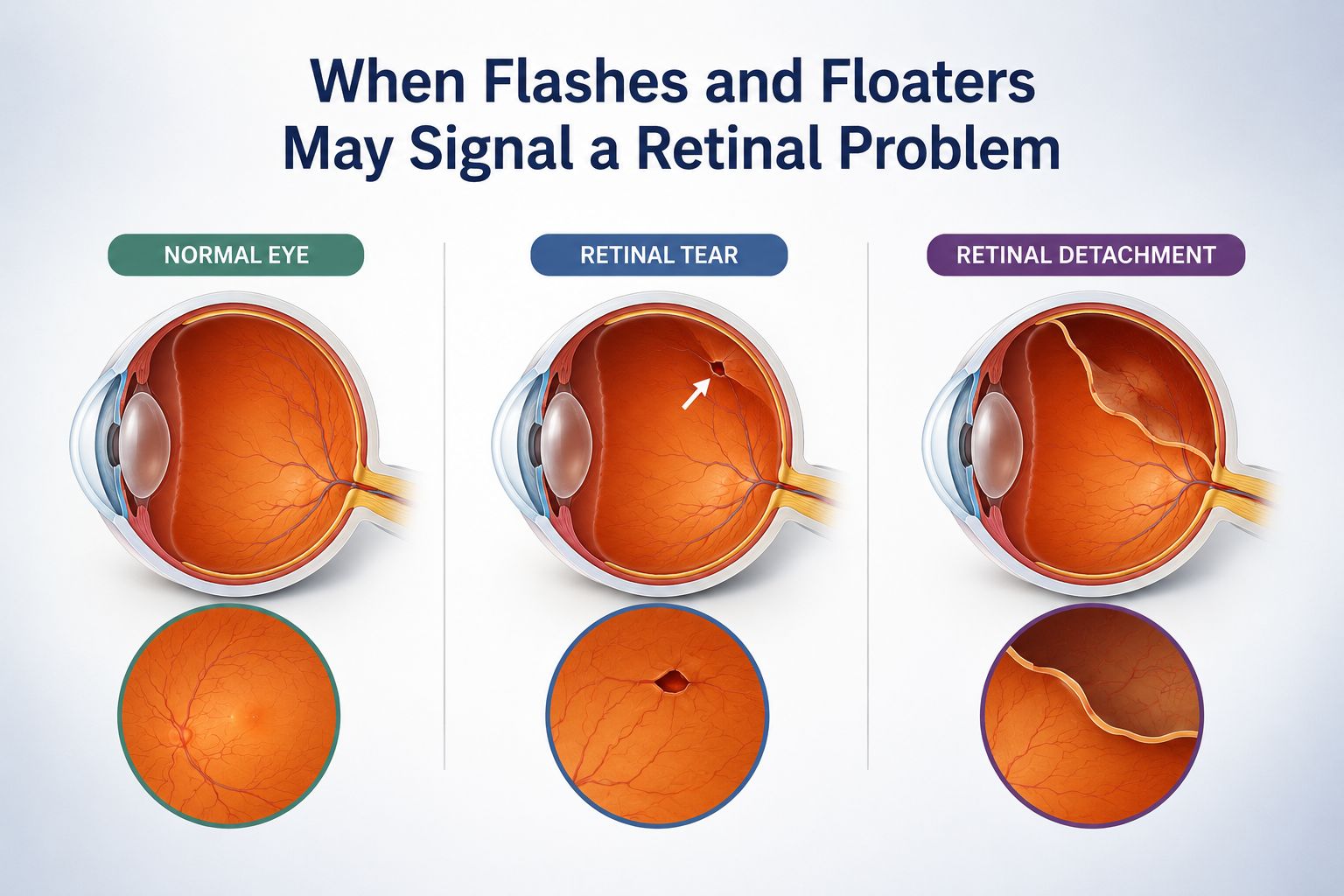
Flashes and floaters can happen for different reasons. However, some symptoms may suggest a retinal tear or retinal detachment.
Seek urgent eye assessment if you notice:
-
A sudden increase in floaters
-
New flashes of light
-
A dark shadow or curtain moving across your vision
-
Sudden blurred vision
-
Sudden loss of side vision
-
Sudden vision loss in one eye
These symptoms may occur without pain. Because there may be no discomfort, some people delay getting checked. However, waiting can increase the risk of permanent vision loss if the retina has detached.
What Is a Retinal Tear?
A retinal tear happens when the retina develops a small break or tear.
This may occur when the vitreous gel inside the eye shrinks or pulls away from the retina. If the pulling is strong enough, it can create a tear in the retinal tissue.
A retinal tear may cause flashes, floaters, or blurred vision. In some cases, treatment such as laser therapy may be recommended to seal the tear and reduce the risk of retinal detachment.
What Is Retinal Detachment?
Retinal detachment happens when the retina pulls away from its normal position at the back of the eye.
When this occurs, retinal cells are separated from the blood vessels that provide oxygen and nutrients. If not treated quickly, retinal detachment can lead to permanent vision loss.
Retinal detachment is an eye emergency. Early diagnosis and timely treatment are important to help protect vision.
Who May Have a Higher Risk of Retinal Problems?
Retinal tears and detachments can happen to anyone, but certain factors may increase the risk.
These may include:
-
Severe short-sightedness
-
Previous eye surgery
-
Eye injury
-
A previous retinal tear or detachment in one eye
-
Family history of retinal detachment
-
Age-related changes in the vitreous
-
Certain retinal conditions
If you have risk factors and notice new flashes, floaters, or changes in vision, it is important to seek assessment promptly.
How Are Flashes and Floaters Checked?
An eye specialist may perform a dilated eye examination to look carefully at the retina.
During this examination, eye drops are used to widen the pupil so the doctor can examine the back of the eye more clearly. This allows the specialist to check whether there is a retinal tear, retinal detachment, bleeding, inflammation, or other eye condition that may be causing the symptoms.
Additional imaging tests may be used if needed.
How Are Retinal Tears or Detachments Treated?
Treatment depends on the cause and severity of the retinal problem.
A retinal tear may be treated with laser or freezing treatment to help seal the tear and reduce the risk of detachment.
If retinal detachment has occurred, surgery is usually needed to repair the retina. The type of surgery depends on the location, size, and severity of the detachment, as well as the overall condition of the eye.
The earlier a retinal tear or detachment is detected, the better the chance of protecting vision.
Do Not Wait for Your Vision to Fade
Flashes and floaters are not always dangerous, but sudden changes should never be ignored.
A few occasional floaters may be harmless, especially if they have been present for a long time and have not changed. However, a sudden increase in floaters, new flashes of light, a dark curtain-like shadow, or sudden blurred vision may signal a retinal problem that needs urgent attention.
Your retina does not cause pain when something is wrong. Sometimes, flashes and floaters are the warning signs.
If you notice sudden changes in your vision, arrange an urgent eye assessment. Early detection and timely treatment can make an important difference in protecting your sight.
Explore our Ophthalmology Services to learn more about eye assessment, retinal care, and treatment options for vision-related concerns.
Was this article helpful?
3 out of 3 found this helpful
Suggest to Read