


Endoscopic Ultrasound (EUS) Package
01 April 2026
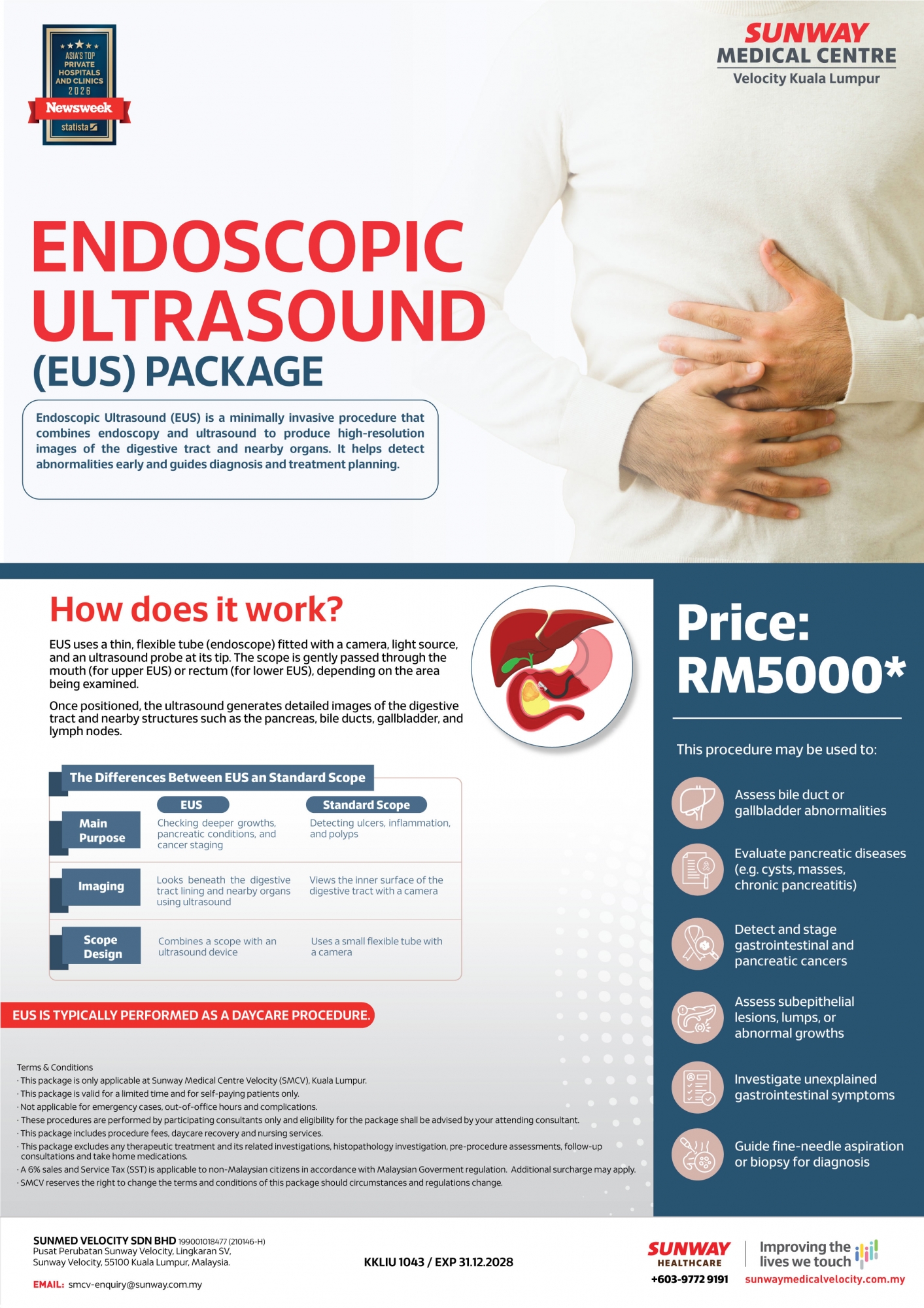
Endoscopic Ultrasound (EUS) is a minimally invasive procedure that combines endoscopy and high-resolution ultrasound imaging to examine the digestive tract and surrounding organs, including the pancreas, bile ducts, gallbladder and nearby lymph nodes.
This procedure allows doctors to detect abnormalities at an early stage and guide further diagnosis or treatment planning with greater precision.
What Is Endoscopic Ultrasound (EUS)?
EUS uses a thin, flexible tube (endoscope) equipped with a light source, camera, and an ultrasound probe at its tip.
The scope is gently inserted through the mouth to examine the upper digestive tract, depending on the area of concern. Once positioned, the ultrasound probe produces high-frequency sound waves to generate detailed images of the digestive organs and surrounding structures.
If necessary, EUS can also be used to guide fine-needle aspiration (FNA) or biopsy of suspicious lesions for further laboratory analysis.
What Can EUS Be Used For?
This procedure may be recommended to:
- Assess bile duct or gallbladder abnormalities
- Evaluate pancreatic conditions such as cysts, masses or chronic pancreatitis
- Detect and stage gastrointestinal and pancreatic cancers
- Assess subepithelial lesions or abnormal growths
- Investigate unexplained abdominal or gastrointestinal symptoms
- Guide fine-needle aspiration or biopsy for diagnostic confirmation
Your specialist will determine suitability based on your clinical condition and imaging findings.
The Differences between Endoscopic Ultrasound (EUS) and Standard Endoscopy (Scope)
|
Feature |
Standard Scope (Endoscopy) |
EUS (Endoscopic Ultrasound) |
|
What it sees |
Surface lining of digestive tract |
Deeper layers + surrounding organs |
|
View depth |
Surface only |
Beyond surface (walls, nearby structures) |
|
Organs assessed |
Oesophagus, stomach, intestine (inner layer) |
Pancreas, bile duct, lymph nodes, surrounding tissue |
|
Detection ability |
Ulcers, inflammation, bleeding |
Tumours, cysts, hidden lesions |
|
Biopsy capability |
Surface biopsy only |
Can guide deep tissue biopsy (EUS-guided) |
|
Accuracy |
Good for visible conditions |
Higher accuracy for deeper conditions |
|
Role in cancer |
Detect visible abnormalities |
Detect + stage cancer more precisely |
|
Invasiveness |
Minimally invasive |
Minimally invasive (with added ultrasound) |
What to Expect
EUS is generally performed as a day care procedure. Sedation is administered for comfort during the examination.
The procedure duration varies depending on complexity and whether biopsy sampling is required. Most patients are able to return home on the same day, subject to medical assessment.
Your attending consultant will discuss findings and next steps following the procedure.
Package Price
RM5,000*
Eligibility and suitability will be assessed by the attending consultant.
When Should You Consider EUS?
You may be advised to undergo EUS if:
- Previous imaging (CT, MRI, ultrasound) requires further clarification
- There is suspicion of pancreatic or biliary disease
- A lesion requires tissue sampling for diagnosis
- You have persistent unexplained upper abdominal symptoms
Early and accurate evaluation plays a crucial role in effective treatment planning.
Make an Appointment
To find out whether this package is suitable for you, please consult our Gastroenterology team.
Term and Condtions:
6% Sales and Service Tax (SST) applies to non-Malaysian citizens in accordance with government regulations
*Full terms and conditions apply.