



Could Your Child Be Missing Clear Vision? What Every Parent Should Know About Lazy Eye
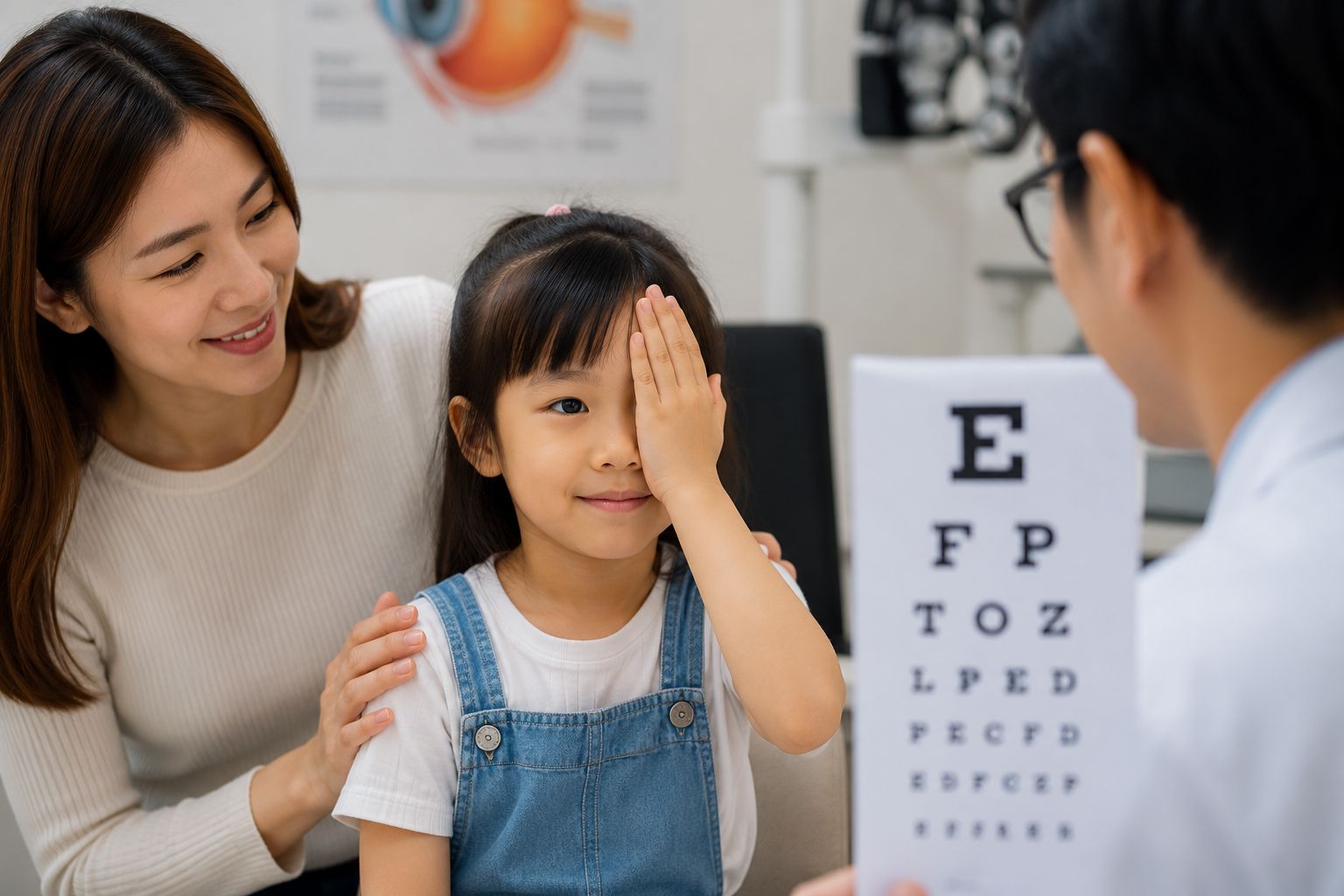
Children may not always realise when one eye is not seeing clearly. They may continue playing, reading or watching TV as usual, while the brain gradually relies more on the stronger eye. Over time, the weaker eye may not develop normal vision, a condition known as lazy eye or amblyopia.
Let’s learn more with Dr. Fiona Chew Lee Min, Consultant Ophthalmologist specialising in Paediatric Ophthalmology and Strabismus Surgery, to understand the signs parents should look out for and how early assessment and treatment can support a child’s long-term vision.

What Is a Lazy Eye in Children?
Lazy eye happens when vision in one eye does not develop properly during childhood.
This may occur when one eye has poorer focus, when the eyes are not aligned properly, or when something blocks clear vision in one eye. When this happens, the brain may start relying more on the stronger eye and pay less attention to the weaker one.
If left untreated, the weaker eye may remain underdeveloped, even if the eye itself looks normal.
Common Signs and Symptoms of Lazy Eye in Children
Lazy eyes can be difficult to notice, especially when a child does not complain about vision problems.
Parents may notice signs such as:
* Squinting or closing one eye
* Tilting the head to see better
* One eye turning in or out
* Poor depth perception
* Difficulty reading or focusing
* Sitting very close to the TV or screen
* Frequent eye rubbing or eye strain
Some children may show no obvious signs at all, which is why routine vision screening is important.
Why Early Detection and Treatment of Lazy Eye Matters
A child’s vision develops rapidly during the early years of life. When a lazy eye is detected early, treatment can help encourage the weaker eye to work better and support healthier visual development. Depending on the cause, treatment may involve glasses, patching the stronger eye, eye drops, or other approaches recommended by the doctor.
The earlier the condition is identified, the better the What Parents Should Know About Lazy Eye.
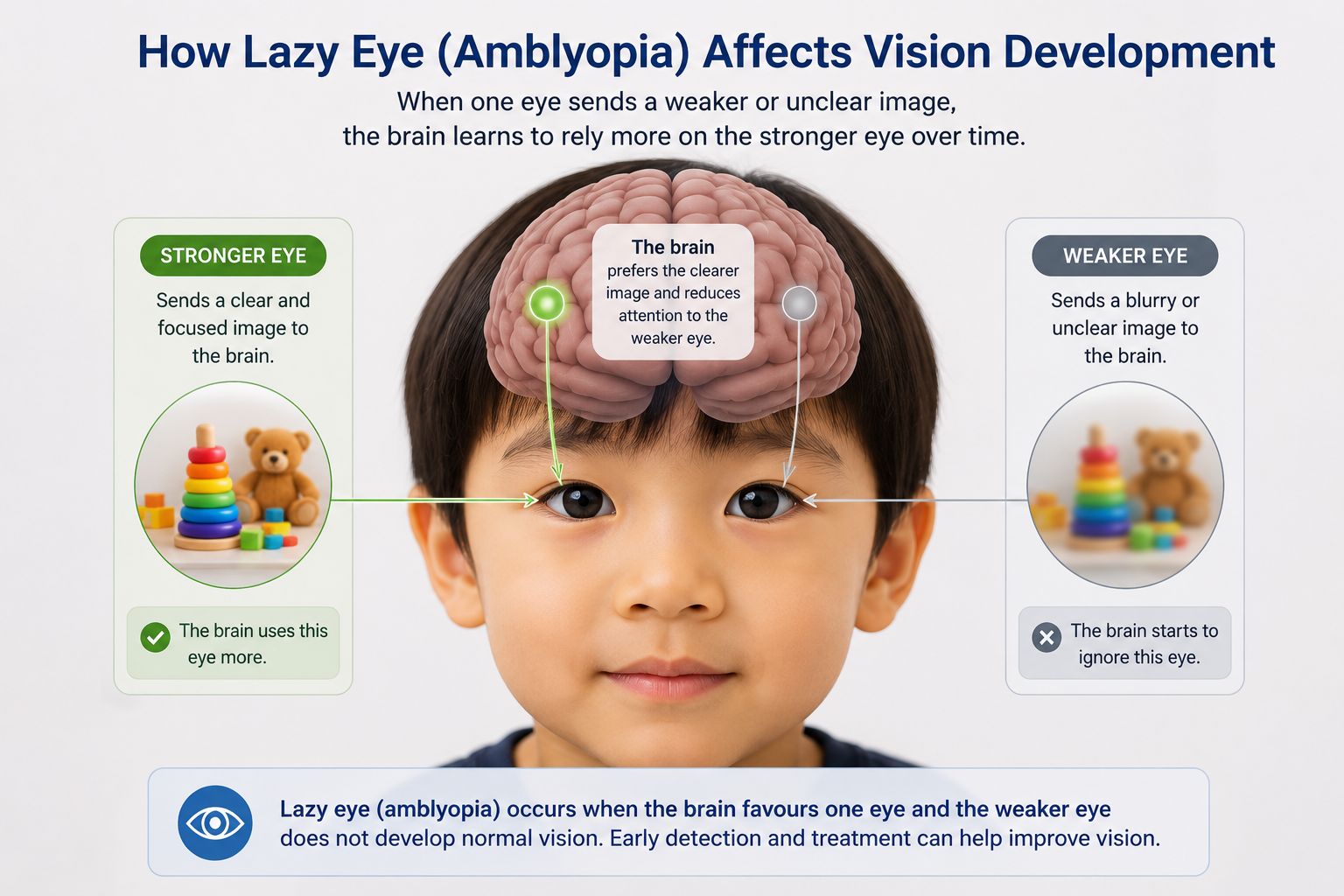
Lazy eyes are not always obvious, and children may not realise that one eye is weaker.
If your child has trouble seeing clearly, shows signs of eye misalignment, struggles with reading, or has not had a recent eye check, it may be helpful to arrange an eye assessment. Early care can help protect your child’s vision and support their learning, confidence, and daily activities.
Can Lazy Eye Become Permanent or Affect Eye Alignment?
Lazy eye itself does not usually cause the eyeball to turn more. However, some children with lazy eye may also have an eye alignment condition, where one eye turns inward or outward.
If the eyes are not working together properly, the brain may gradually rely more on the stronger eye and reduce attention to the weaker eye. Without early treatment, vision in the weaker eye may remain reduced and become more difficult to improve later in life.
The good news is that early assessment and treatment can make a meaningful difference. If you notice one eye turning, frequent squinting, head tilting, or changes in how your child sees, it is important to arrange a paediatric eye assessment.
When Should Your Child See a Paediatric Ophthalmologist?
If you notice changes in your child’s eyesight, eye alignment, or visual behaviour, consider speaking with a paediatric ophthalmology specialist for a comprehensive assessment.
Learn more about our Paediatric Ophthalmology services and how early vision assessment can support your child’s eye health.
这篇文章对您有帮助吗?
有1 位用户在 1 位中觉得这很有帮助。
Suggest to Read