


From Scan to Surgery: How 3D Printing Supports Complex Orthopaedic Care
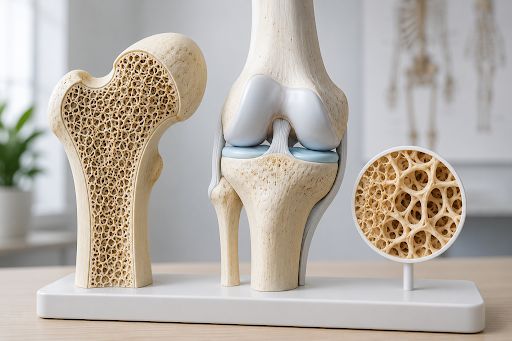
Imagine your surgeon holding a precise, physical replica of your bone before your surgery even begins.
For anyone facing complex fractures, bone tumours, severe deformities, or major bone defects, every single millimeter matters. Because no two bodies are exactly alike, even tiny differences in your unique anatomy can completely change how a surgical procedure is approached.
Today, medical 3D printing is transforming how orthopaedic specialists prepare for these exact situations. By turning standard scans into tangible, patient-specific models, surgeons can deeply analyze your unique anatomy and map out an entire procedure with incredible precision long before entering the operating room. To help us explore this advanced technology and see how modern innovation translates into real benefits for patient recovery, we look to the insights of Dr. Yuen Jin Chuan, Consultant Orthopaedic Surgeon.
Seeing Beyond the Screen
Most of us are familiar with standard imaging like CT scans or MRI scans. While these advanced scans provide vital diagnostic information, they are traditionally viewed as flat, two-dimensional images on a computer screen. Medical 3D printing takes this technology a massive step forward.
By using your precise imaging data, a specialist can recreate your exact bone or joint as a physical, three-dimensional model. This means your surgical team can physically hold the model, closely examine it from every possible angle, and gain a tangible understanding of your unique structure. For complex bone and joint conditions, having this physical perspective provides clear, invaluable insights that simply cannot be replicated on a flat screen alone.
Planning Every Step Before the First Incision
One of the greatest benefits of 3D printing is the ability to plan ahead thoroughly. Having a physical model allows surgeons to:
-
Visualize the exact fit: Doctors can pre-size surgical plates, screws, or implants against the model to find the most accurate fit for your body.
-
Anticipate unique challenges: The team can explore the physical model to identify hidden structural challenges beforehand, reducing unexpected variables during treatment.
-
Streamline time: Because much of the complex mapping is completed in advance, the time you spend under anaesthesia can often be minimized, supporting a smoother overall experience.
For patients, this modern combination of advanced imaging and physical modeling typically translates to greater peace of mind, less postoperative discomfort, and a more predictable path toward healing.
A Clearer View of Your Health Journey
Medical technology is at its best when it makes your care journey clearer, safer, and more personalized. By moving beyond traditional scans into touchable, high-precision models, orthopaedic specialists can approach complex conditions with a profound level of clarity tailored exclusively to your body.
If you or a loved one are exploring options for advanced bone or joint care, or if you have questions about upcoming procedures, having an open conversation with a specialist is a wonderful place to start. If you would like to learn more about how customized planning can support your recovery, feel free to visit our Orthopaedic Specialist to connect with our dedicated care teams and discover the advanced technologies available to help you safely return to the activities you love.
这篇文章对您有帮助吗?
有2 位用户在 2 位中觉得这很有帮助。
Suggest to Read